History
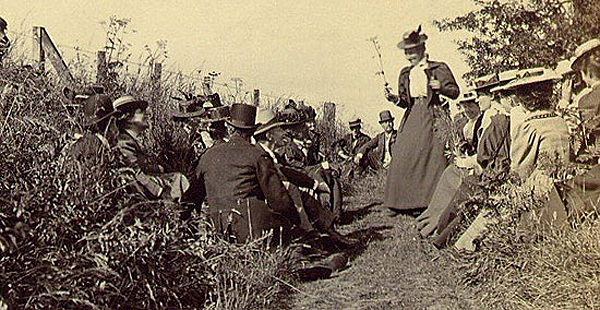
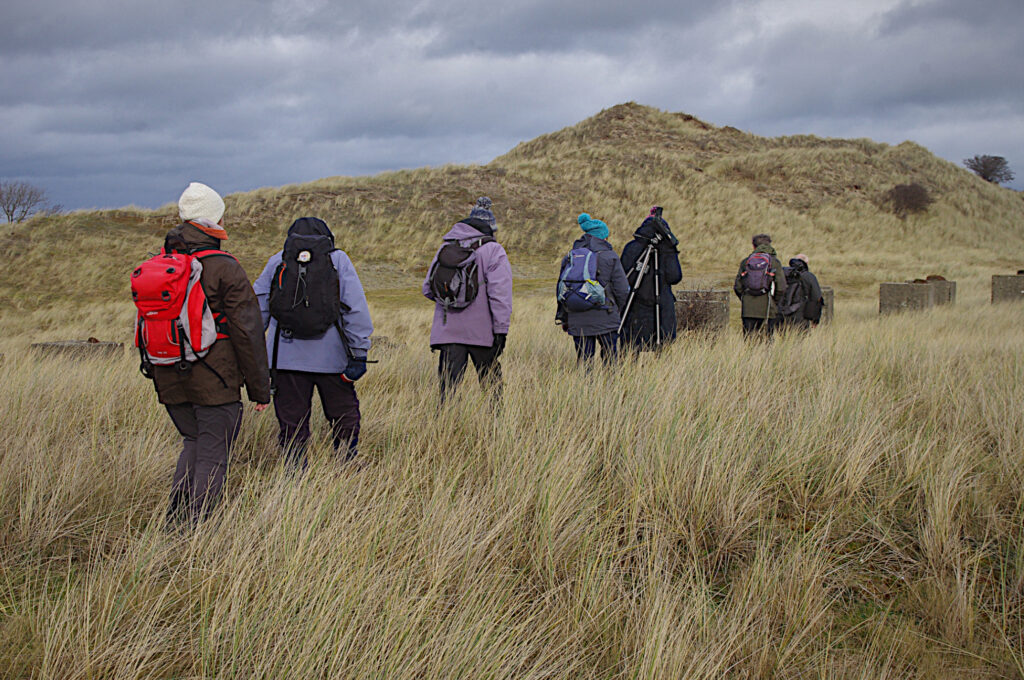
The Edinburgh Natural History Society was instituted in 1869 as The Edinburgh Naturalists’ Field Club. For a number of years, the Club only held field meetings until, in November 1879, evening meetings were introduced during the winter months.
This proved very successful and in 1881 it published the Transactions, a record of papers read and objects exhibited at the meetings. The first volume of Transactions covers the period 1881-86.
During this initial period the first President was John Walcot while the third, J Symington Grieve, was a prominent Scottish naturalist, author, antiquarian and archaeologist, notable for his studies of Mesolithic and Viking-era burials on the Scottish islands.
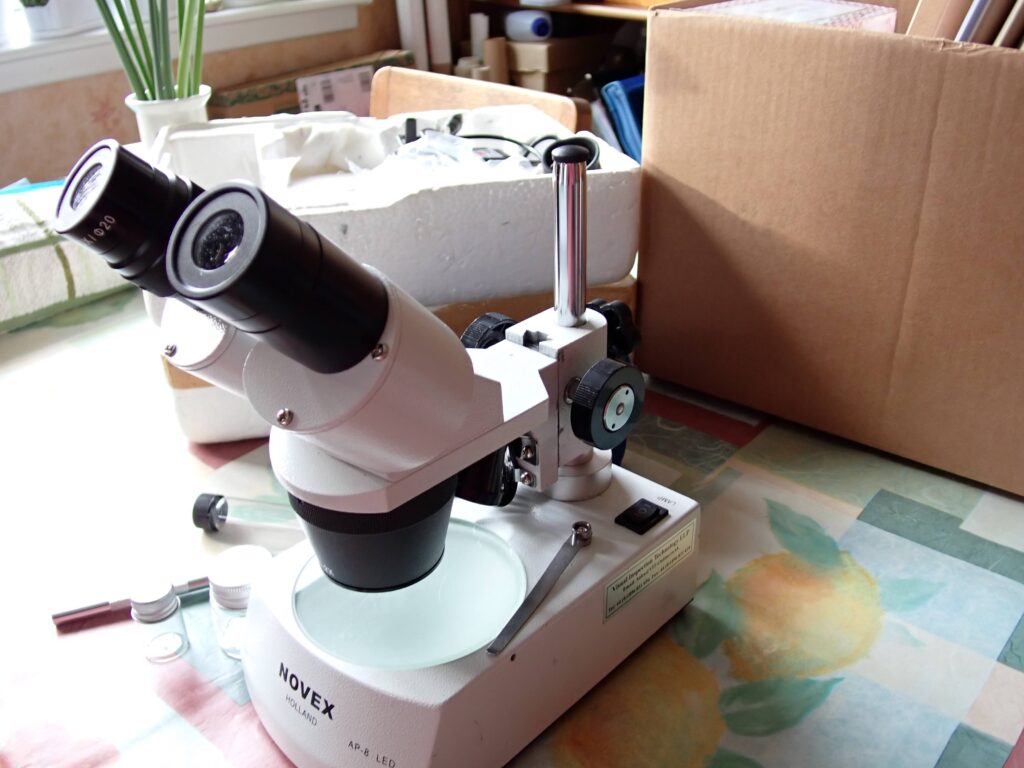
Shortly after 1881 the name of the Society changed to the ‘Edinburgh Field Naturalists’ and Microscopical Society’ reflecting the increased use of the microscope. Joint Transactions were published till 1915 and are accessible online at the Biodiversity Library website.
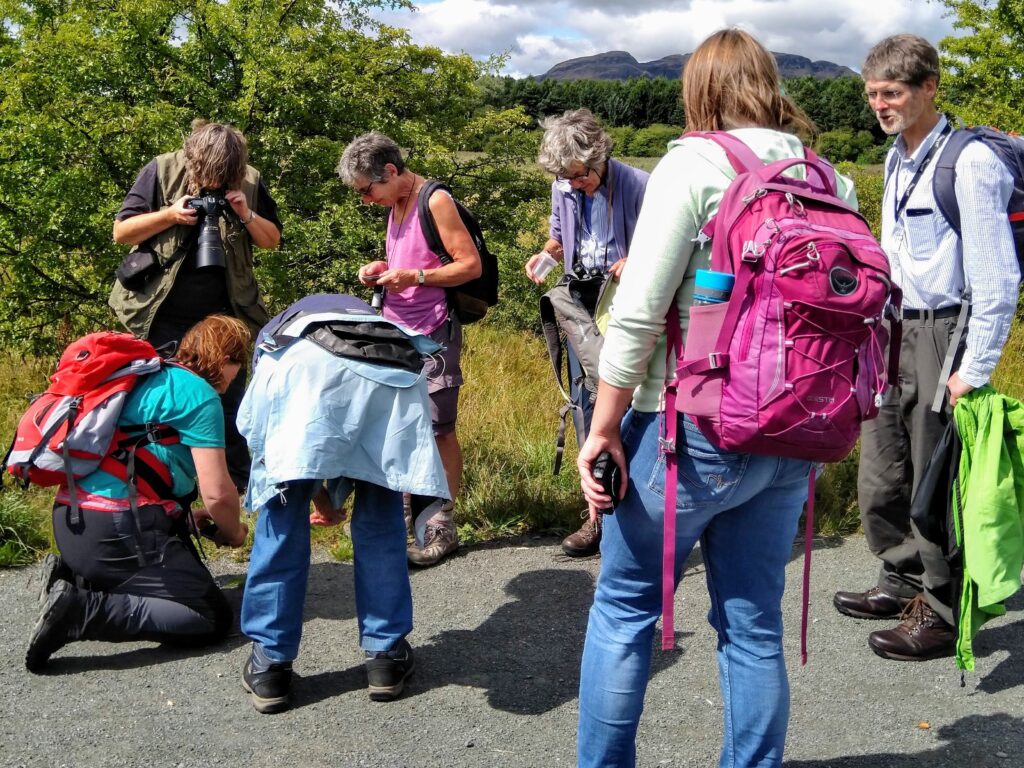
The Society’s comprehensive programme included not only the fundamental subjects of Geology, Botany and Zoology, but also Microscopy, Archaeology and Astronomy, with a little Photography and Meteorology.
Lectures were illustrated by gas lantern prior to the introduction of electricity. Excursions took them all over the Lothians with day trips to further afield to places as Tentsmuir. In 1921 the Society merged with the Scottish Natural History Society, founded in 1881, and was now a more academic Society with the backing of University professors.
These scientists included J. Cossar Ewart (Zoology) who carried out various studies, including breeding experiments with horses and zebras, (performed at “The Bungalow”, now the Navaar House in Penicuik), well before the rediscovery of Gregor Mendel’s works. Also, James Geikie (Geology) of the Geological school which upheld the all-important action of land-ice and James Trail (Botany) who fed his love of botany first as official botanist to the Amazon Steam Navigation Company in 1873, then in 1876 as official botanist to the colony of British Guiana.
The combined meeting of the two Societies was held in the Goold Hall, 5 St. Andrew Square, Edinburgh, in October 1921, when a resolution to unite was ‘carried by acclamation’ and the the present name of the Society formalised.
Little changed in subsequent years although, in 1958, 3-night weekend excursions were introduced. Trips to Aviemore, Glencoe, Birnam, Newton Stewart and Arnside were very successful, with member sightings including crossbills, osprey, as well as Vernal Squill, Green-winged Orchid and Adder’s-tongue fern. The social aspect seems to have been much enjoyed.
In 1965, fifty years after the publication of the last Transactions of the Edinburgh Field Naturalists’ and Microscopical Society, the committee of the now Edinburgh Natural History Society introduced a Newsletter, which would ‘serve to summarise the work of the Society and keep members informed of what is being achieved’.
The period 1965 to 2009 is covered by bound volumes of the Society’s yearly Journal. Many illustrious names appear throughout these volumes, from dedicated organisers and field trip leaders to professional members and speakers. These Journals are in a searchable digital format in the Biodiversity Heritage Library website.
In 2015 the Society became a Scottish Charitable Incorporated Organisation (SCIO) and in 2019 celebrated its 150th anniversary with an event at Newbattle Abbey College.
After an enforced break in 2020 from Covid lockdown regular meetings resumed in summer 2021 with a more local focus. Today, as AI and digital tools reshape natural history, we recognise the many benefits they bring – from improved species identification to easier access to knowledge.
Yet, at the Society, we believe technology should support learning, not replace it. Our purpose remains unchanged: to advance natural history education through direct experience, observation, and personal engagement with the natural world.
Interested in joining us?
If you would like to meet like-minded individuals and take part in our events then you can join now for only £15 a year for individuals, £20 a year for households and £5 for under 30s.